Digitalization in property management is often discussed in extremes. It is either framed as a massive transformation project or as something AI will magically solve. In reality, neither reflects how commercial property teams actually work.
While ESG requirements, reporting obligations, and tenant expectations continue to grow, many organizations are still struggling with fragmented data, Excel-based workflows, and manual processes. The challenge isn’t a lack of technology. It is the absence of a clean, centralized data foundation that brings clarity and control to everyday operations.
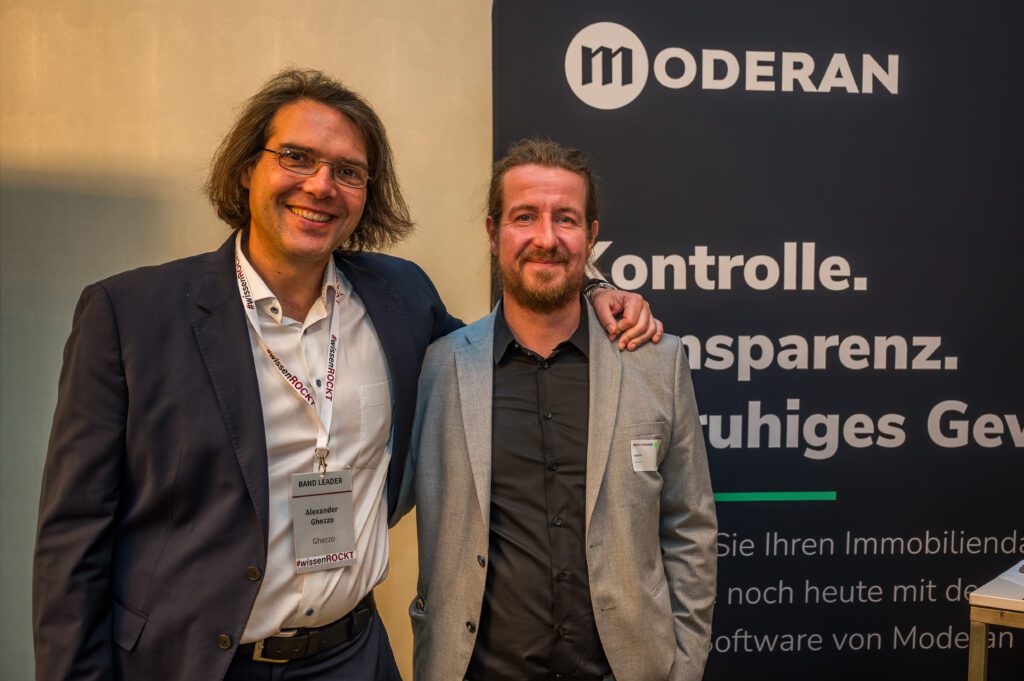
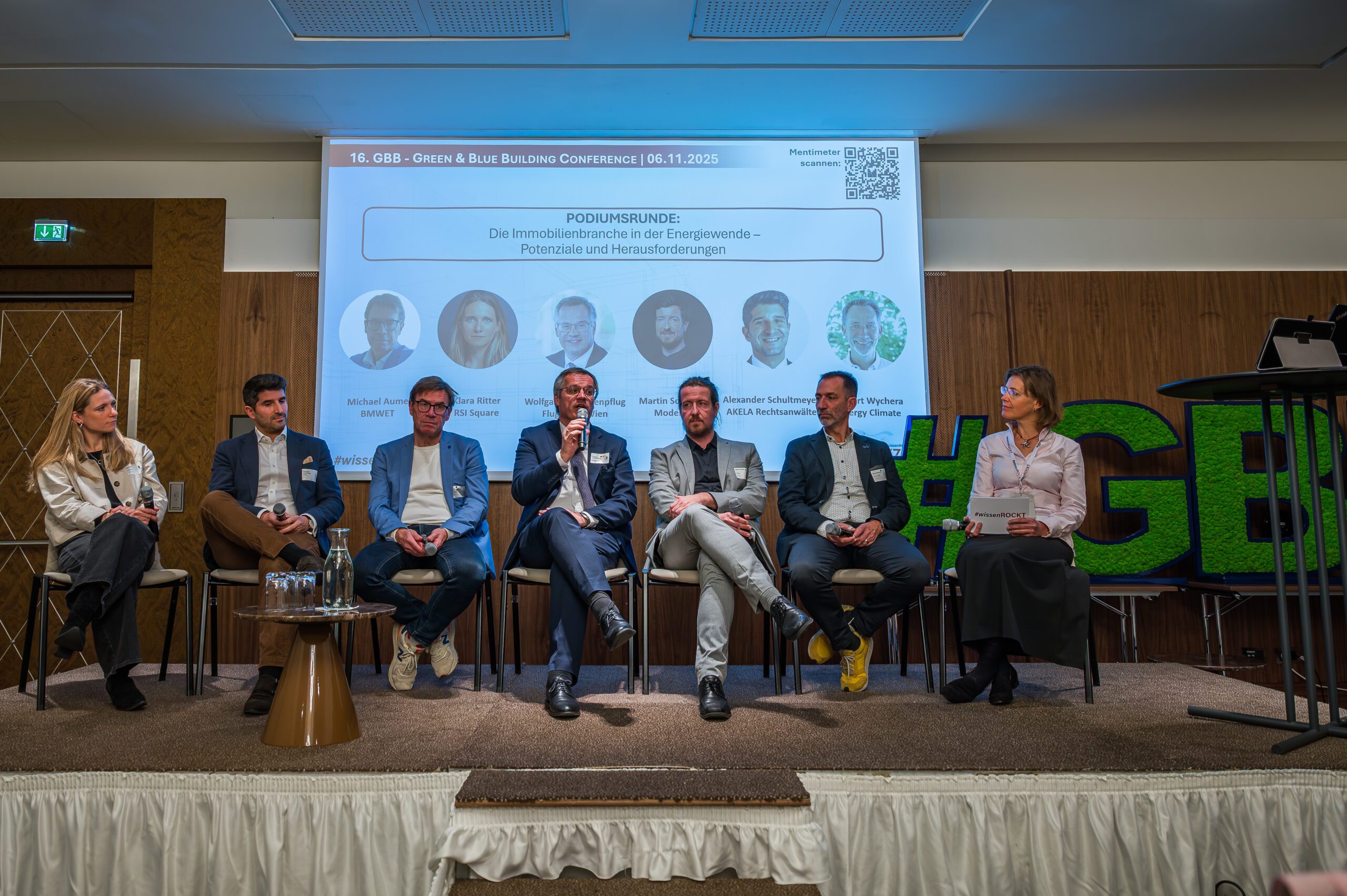
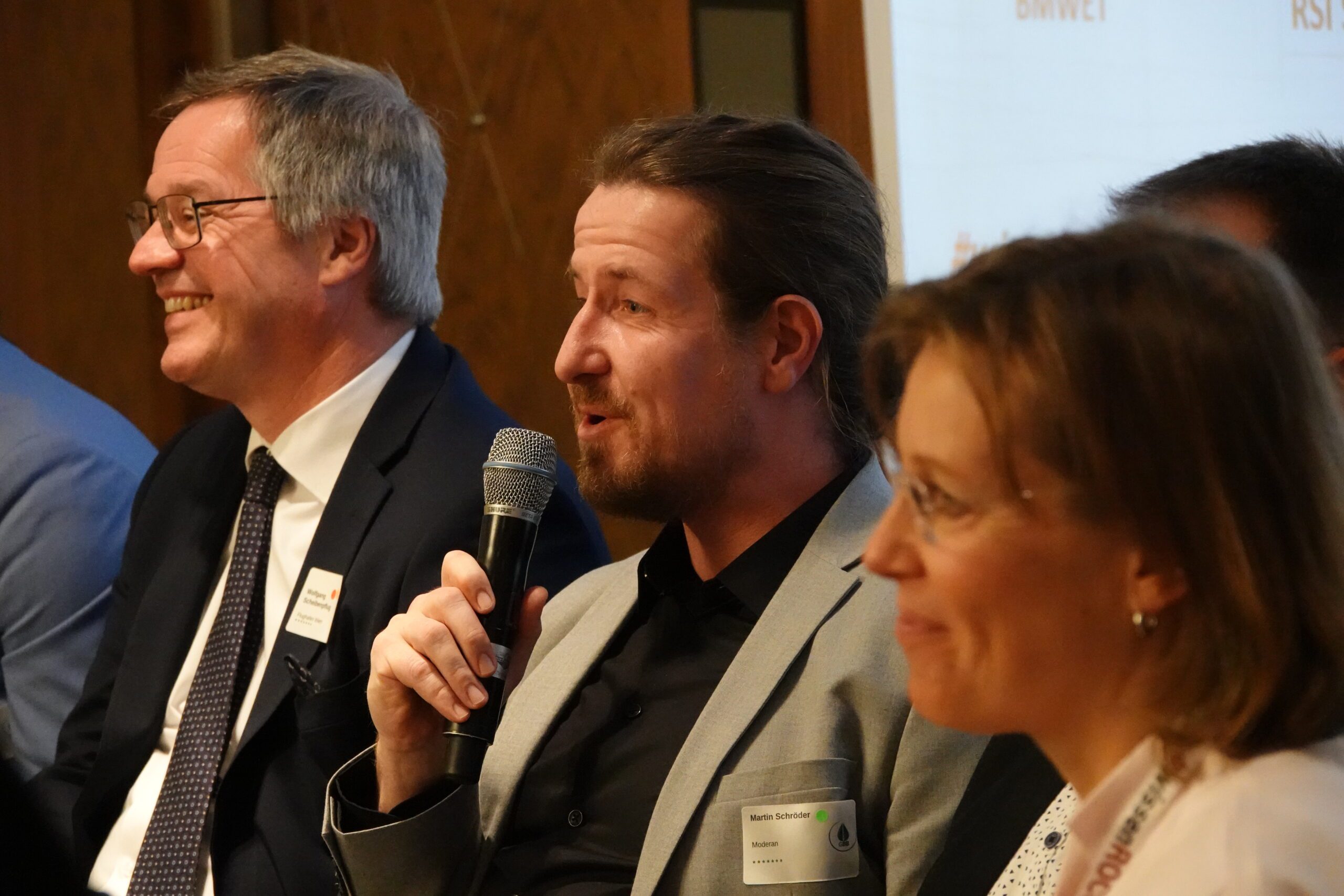
These questions were also at the heart of the 16th Annual Green and Blue Building Conference in Vienna last November, organized by Ghezzo: Wissen rockt! There, industry experts discussed the real opportunities and limitations of digitalizsation in general, and especially AI, in the built environment. Following a panel discussion on energy transition and real estate industry, Alexander Ghezzo sat down with Martin Schröder, Sales Manager for German-speaking markets at Moderan, to continue the conversation about the core value of digitalization beyond the stage.
In this interview, Martin shares a pragmatic perspective on digitalization in commercial property management. He explains where property managers can achieve quick wins today, why AI is often misunderstood, which international examples are worth paying attention to, and why flexibility, enabled by clean and reliable data, is becoming the new standard for commercial properties.
Adapted from the original German interview.
Alexander Ghezzo (AG): Why does property management struggle so much with digitalization, and where are the real quick wins?
Martin Schröder (MS): The real estate industry is traditionally shaped by long-term contracts, complex processes, and established structures. Many property managers still rely on Excel spreadsheets, paper files, or disconnected legacy software systems. There are two main reasons for this.
First, there is the mindset of “what has worked so far doesn’t need to change.” The real obstacle isn’t missing technology. It is the challenge of changing familiar processes. Digitalization means change, and that requires a willingness to question long-standing habits.
Second, introducing new software is often perceived as time-consuming and expensive. Sometimes that perception is justified, but it doesn’t have to be.
Especially in property management, the situation has become increasingly challenging. Requirements are growing more complex, including ESG, operating cost optimization, and reporting, while margins are under pressure. Many teams are simply overloaded. They face more tasks and more responsibility, but hardly any additional resources. As a result, digitalization is often seen as extra work rather than relief.
And yet, this is exactly where the quick wins lie. A central, transparent, and reliable data foundation makes a noticeable difference in day-to-day work. When all data, from energy certificates to contract deadlines, is digitally recorded and easy to access, decisions can be made faster and on a more solid basis. Instead of wasting time searching for information, property managers have an immediate overview and can focus on what really matters: actively managing their properties.
AG: How do you assess the current AI hype?
MS: Expectations are enormous, as if AI could solve all industry problems at the push of a button. But it’s important to remember that property management is built on contracts, deadlines, and human relationships. These are processes that cannot be handled by algorithms alone.
Another key issue is responsibility. Who is really willing to leave decisions about real estate to an AI whose results are, at best, only partially transparent? In real estate, millions or even billions of dollars are at stake. Even when AI is used for more routine tasks, a human still needs to maintain oversight and make the final call. If an investment fails or a deadline is missed, the liability does not lie with the AI. It lies with the property or asset manager.
That is why we see AI in practice as a supporting tool, not a replacement for human expertise.
From our perspective, AI is most valuable when it takes on clearly defined tasks, such as automatic text recognition in documents. This is where real efficiency gains can be achieved.
But without a clean data foundation, AI is useless. If information is scattered, incomplete, or inaccurate, AI amplifies these problems rather than solving them. That is why our priority is not to use AI at all costs, but to create a structured, centralized, and transparent data landscape. Only on that foundation can AI truly deliver its value.
AG: Which international examples do you find inspiring, and where does Austria stand by comparison?
MS: Estonia is a fascinating example. The country has been operating virtually paperless for around 25 years. This applies to public administration, healthcare, and the real estate sector. Processes that are still often handled with Excel or physical files elsewhere have been fully digital, efficient, and transparent there for years. This approach depends on the right public infrastructure.
In Austria, the picture is different. I would not claim to give a definitive assessment, but my personal impression is that Austria is still at an early stage by comparison. Many property managers continue to rely on Excel spreadsheets and isolated systems. In some areas, over-regulation makes innovation more difficult. Additional bureaucratic layers often make new digital solutions more complex than they need to be.
At the same time, change is clearly underway. Rising costs, more complex tenant requirements, and ESG regulations are putting pressure on companies. As a result, more organizations are starting to seriously engage with digitalization.
AG: In commercial real estate, tenants, spaces, and contracts change rapidly. How can this complexity still be managed?
MS: That is true, especially in commercial real estate. The level of dynamism is enormous and has increased further in recent years. Tenants change more frequently, spaces are reconfigured, and contracts are constantly renegotiated. Anyone working solely with Excel or filing cabinets quickly loses oversight and, with it, control.
The only practical answer to this complexity is a structured, centralized data foundation. When all information about spaces, contracts, and terms is maintained in one place, kept up to date, and accessible at any time, transparency emerges. This allows decision-makers to react quickly to change instead of piecing together incomplete data.
In addition, a digital platform makes it possible to largely automate processes such as deadline management, reporting, and service charge settlements. This significantly reduces administrative effort.
AG: What trends are you currently seeing in the use of commercial space?
MS: We are clearly seeing a trend toward greater flexibility. Traditional long-term leases are losing importance, while shorter terms and more flexible models are becoming more attractive. Many companies no longer want to commit to spaces for ten or fifteen years. Instead, they want to use them in line with their current business needs.
At the same time, a sharing culture is emerging. Coworking spaces, temporary offices, and shared infrastructure are becoming more relevant even in traditional commercial environments. Users increasingly expect spaces to adapt to their needs, not the other way around.
This development will continue to accelerate. Flexibility is becoming the standard, not the exception. Owners and managers who want to remain successful in the long term must respond with modular space concepts, adaptable contracts, and digital support that makes this flexibility possible in the first place. When spaces, leases, deadlines, and costs are brought together in one place, teams can make adjustments without rebuilding entire workflows in Excel.
AG: What truly sets Moderan apart from traditional property management systems?
MS: What distinguishes Moderan starts with the foundation. It is fully cloud-based. While that may sound obvious today, in practice it often is not. Many property managers still work with locally installed software, VPN access, or limited remote solutions. With Moderan, teams can work from anywhere. Updates run automatically, and there are no hidden IT costs for servers, maintenance, or version upgrades.
Another key differentiator is Moderan’s approach as an open platform. Rather than trying to do everything, Moderan acts as a central data and process layer that connects with specialized solutions through integrations such as accounting, CRM, or smart metering systems. This allows organizations to build their own ecosystem instead of choosing between rigid all-in-one tools or disconnected point solutions.
Moderan’s focus is clearly on commercial real estate, especially on SMEs. Many traditional systems are either residential-first or built for large enterprises. Both come with corresponding complexity and implementation effort. Moderan is designed for teams that manage commercial space professionally but do not have a dedicated IT department. This is reflected in intuitive interfaces, a clear logic built around spaces and contracts, and a deliberately low barrier to adoption. Digitalization should feel like relief, not like another major project.
Operating costs are another area where Moderan stands out. In commercial real estate, they are a critical lever for both profitability and tenant satisfaction. Moderan structures cost data clearly, manages allocation keys transparently, and makes the relationships between spaces, contracts, and costs visible. This reduces errors and follow-up questions while building trust internally and externally.
AG: Is Moderan more of an efficiency tool or a strategic management instrument?
MS: It is clearly both, and that is exactly the point. In practice, the value often starts at the operational level and unfolds fully at the strategic level.
In daily work, Moderan initially functions as a strong efficiency tool. There is less Excel, fewer duplicate entries, and a clear structure instead of scattered information. Reports are no longer created under time pressure. They are generated on demand. That alone significantly reduces workload and frees up time.
But efficiency is only the foundation. Once data is complete, clean, and centralized, Moderan becomes a true management instrument. Owners and managers gain portfolio-level visibility into lease terms, tenant structures, vacancies, revenues, and costs. Strategic questions can then be answered based on data rather than intuition.
Many users start with Moderan to regain control of day-to-day operations. They then realize they can manage their portfolios far more strategically than before.
AG: Sustainability only matters when it is measurable. How does Moderan support that?
MS: Sustainability becomes meaningful when it is more than a buzzword and when it is measurable. In commercial real estate, that requires a clean data foundation that shows how consumption, costs, and emissions evolve over time.
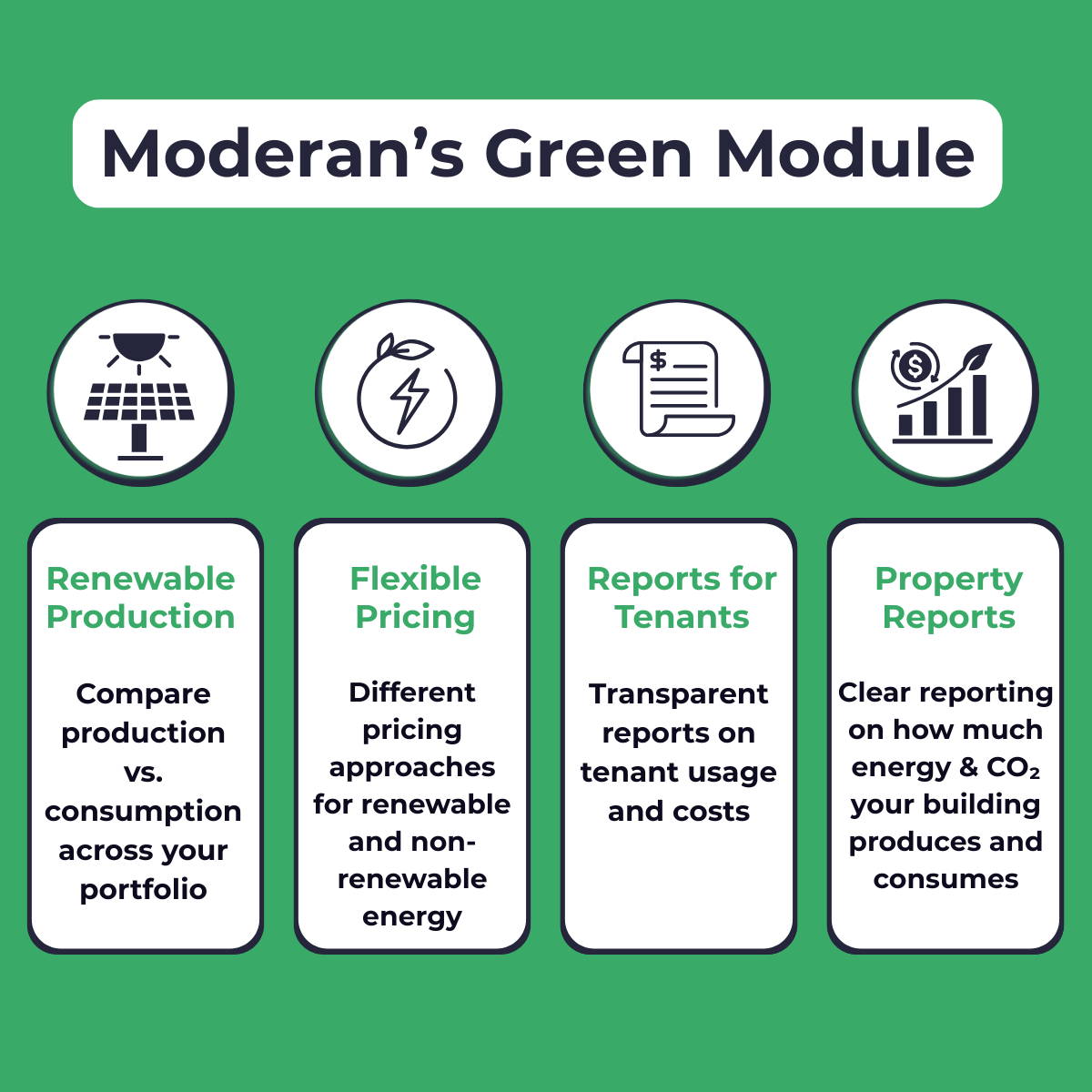
In Moderan, operating costs play a central role. This includes CO₂ emissions that can be directly linked to spaces and lease data. The result is transparency and actionable sustainability metrics.
Moderan also offers a renewable energy module that allows electricity from photovoltaic systems or green power contracts to be reported separately. This makes it visible at all times which share of the energy supply is already renewable.
Importantly, Moderan is not a standalone ESG tool that creates a parallel workflow. Sustainability-related data is integrated directly into daily property management. This includes managing certificates and energy performance documents, as well as tracking consumption and emissions. As a result, sustainability becomes a natural part of everyday operations rather than a separate reporting exercise.
Summing Up
Commercial property management is becoming more complex, not less. As ESG requirements, flexible leases, and reporting obligations increase, the need for clarity and control becomes critical. But at the end of the day, meaningful digitalization doesn’t start with hype or tools; instead it works best with clean, centralized data that supports both daily operations and long-term decision-making.
For property owners and managers, the takeaway is clear: those who invest in a solid data foundation today are better equipped to adapt tomorrow. Flexibility, transparency, and strategic control are no longer optional — they are becoming the standard.
Curious how clean, structured data can support your commercial portfolio?
Book a demo to learn more about how Moderan helps property teams move beyond Excel and manage complexity with clarity.
Martin Schröder is Sales Manager for German-speaking markets at Moderan. He works closely with commercial property owners and managers across the DACH region, helping them bring structure, transparency and control to increasingly complex portfolios. At the 16. Green and Blue Building Conference in Vienna, Martin spoke on a panel about the role of the real estate industry in the energy transition.
Alexander Ghezzo has been active in the events industry since 2000 and has established numerous successful conferences and congresses in Austria, with a strong focus on real estate, facility management and industry. His events are regularly covered by leading media outlets such as Kurier, Wohnkrone, Immobilien Fokus, OIZ and TGA. In addition, Alexander is an experienced trainer in presentation and moderation, problem-solving, leadership, as well as specialised areas of marketing and operational optimisation.