
For many of our customers, rent indexation falls between December and February. Some leases rise by a fixed percentage, others follow CPI or HICP, and a few have clauses of their own. We know it’s a busy time of year, so this article covers what matters in practice: when to set indexation up, which method fits which lease, and what to do when the index arrives late.
You’ll find the click-by-click steps in our Knowledge Base, linked in each section. If you just want the essentials, there’s a short checklist near the end.
When should you set up rent indexation?
Earlier than you might expect. Rent invoices go out at the start of the month, so Moderan calculates a fixed increase at least 30 days before it takes effect. For an increase on January 1, it’s best to have everything set up in Moderan by November 30.
CPI-linked rents work differently. You can’t apply the new figure until it’s published, and the annual CPI usually comes out in the second week of January. What you can do in advance is make sure each contract has a next indexation date, an indexation frequency and the right rent and fee lines marked for indexation.
Which indexation method fits your lease?
Moderan’s commercial lease management software has three ways to index rent. Which one to use depends on what the lease says.
| If the lease says… | Use | What you do |
|---|---|---|
| Rent rises by a fixed % | Automatic (fixed) indexation | Enter it once, at least a month ahead |
| Rent follows CPI, HICP or another index | CPI-based indexation | Apply the published figure to every linked rent at once |
| Something unusual, or a contract was missed | Manual indexation | Update the rent and next indexation date yourself |
How do you index CPI-linked rents across your portfolio?
With one update. Moderan’s CPI tool, % START INDEXATION, lists every rent and fee due for indexation. You can apply the new figure to all of them at once, or filter by index, fee type or tenant first.
Before anything changes, you see a preview of every new amount. You can round the values and export the list to Excel to keep a record. Take a careful look at the preview: once you click INDEX NOW, the new rents are final, and any corrections have to be made contract by contract.
What if the CPI is published after the indexation date?
Invoice as usual, then catch up with Backdated Indexation. Here’s an example: a lease indexes on January 1, and the CPI comes out in mid-January.
Send January’s invoice at the current rent of €2,000.
Once the CPI is published (say, 3.5%), run Backdated Indexation.
February’s invoice shows the new rent of €2,070, plus a separate €70 line for January, clearly labeled for your tenant.
In your revenue reports, that €70 still counts toward January.
See it in action
This short video follows the same example, from January’s invoice at the old rent to February’s invoice with the correction line.
What to check before indexation season
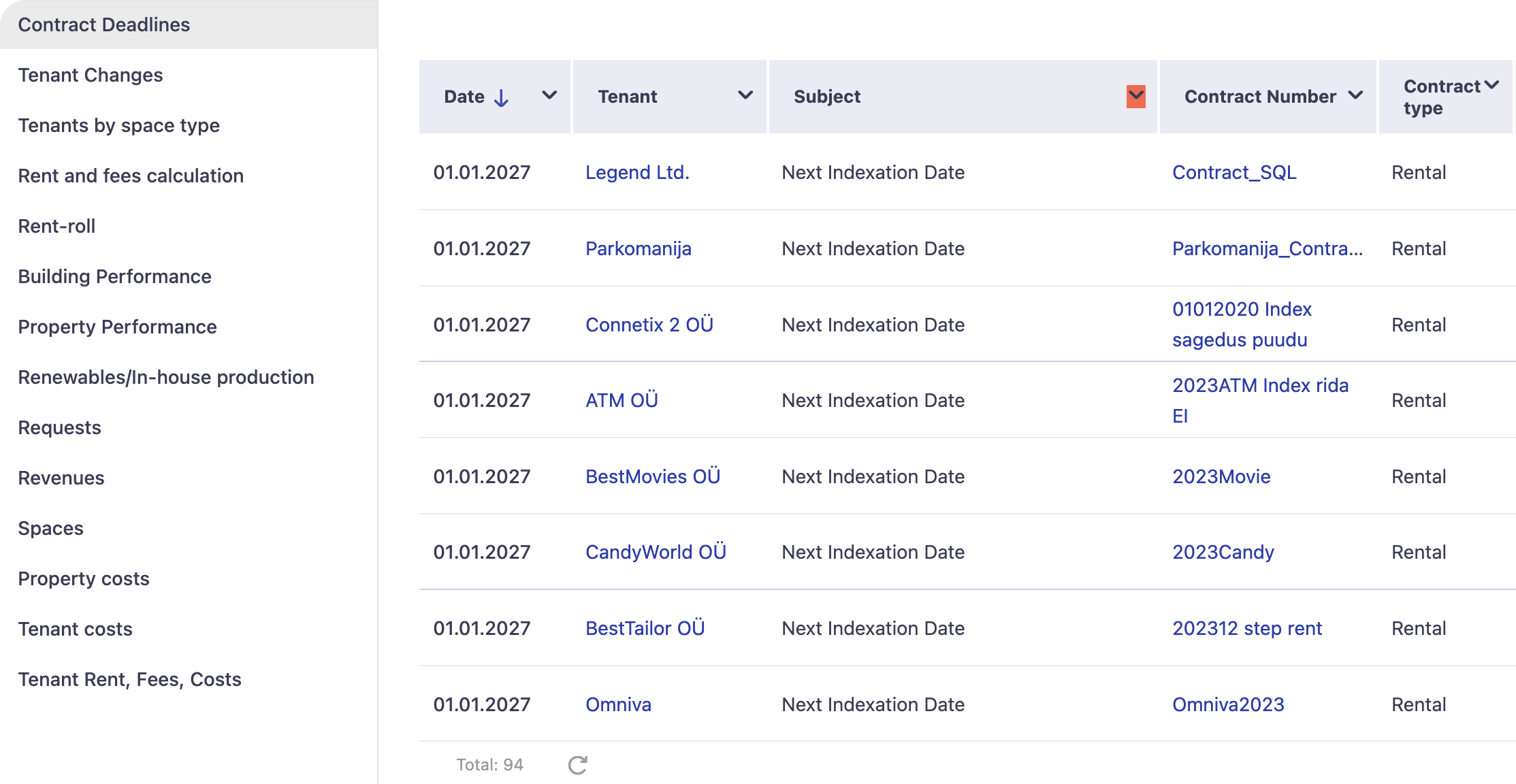
Review upcoming dates in Reports › Contract Deadlines. It shows every upcoming indexation and the method each contract uses.

Check Contact Deadlines report to see when the next rent indexation dates arrive. Check every contract has a next indexation date and the right rent and fee lines marked for indexation. Moderan only indexes the lines you’ve marked.
Set up fixed increases at least a month ahead. For a January 1 increase, that means by the end of November.
Add indexation reminders. Moderan emails you a month before each date. Or set Notify Tenant in the contract’s Indexation section to receive a separate reminder to contact the tenant.
- Plan for January on CPI-linked leases. Run the update once the index is out, or invoice as normal and backdate.
Frequently asked questions
What’s the difference between CPI and HICP?
CPI is the national consumer price index published by each country’s statistics office. HICP is Eurostat’s harmonized index, calculated the same way across EU countries so they can be compared. Your lease says which one applies, and Moderan works with both.
How is a CPI rent increase calculated?
In the simplest case, multiply the current rent by one plus the index change: €2,000 a month with a 3.5% CPI change becomes €2,070. Many leases add a minimum or maximum, such as “CPI, min 2%, max 5%”, so check the clause before you apply the figure.
Can I index service charges and parking, not just rent?
Yes. Any billing line can be indexed, including service charges, parking and marketing fees. You choose which lines are included on each contract.
Can different leases use different indices and dates?
Yes. Each contract has its own indexation basis, date and frequency, and you can filter by any of them when running a CPI update.
What if I apply the wrong figure?
An applied indexation can’t be undone in one step, so each affected contract has to be corrected by hand. That’s why the preview and Excel export come before you click INDEX NOW.
I missed an indexation. Can I still apply it?
It depends on your lease, since many only allow indexation within a set window each year. If yours allows it, Backdated Indexation lets you choose a start date in an earlier month, so the new rent applies from the date in the lease and the difference is billed on the next invoice. For anything unusual, manual indexation gives you full control. A missed increase keeps costing you in the years that follow, which we explain in how missing a lease deadline can cost you millions.
How far ahead should I set up a fixed increase?
In Moderan, ensure the fixed increase is set up at least 30 days before the indexation date.
How can I ensure tenants are notified about an increase in advance?
Use the Notify Tenant field. In the contract’s Indexation section, set Notify Tenant to the notice your lease requires, for example 14 days in advance, and Moderan will email you a reminder to contact the tenant. This is in addition to the indexation reminder, and both go to you rather than to the tenant.
Learn more: Indexation in the Knowledge Base · Questions? Contact us via chat or at support@moderansolutions.com. · New to Moderan? Book a demo